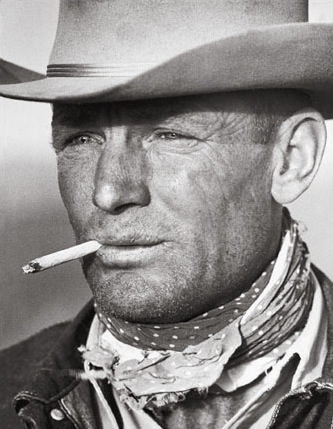
Hangover poem


Face feels
bony
against my palms

Head
several sizes
too big

Will I be missed?

Pub introductions
bathroom people
with dilated pupils

The lady that spent
the night
whose name I don’t remember
and who will never
call me

Will I be missed?

Shower cant be
cold enough
dripping across
my bony face

upset waiters
and bouncers
escorting you
out of a venue

the loneliness
of being detained
by police

something large
and important
not addressed enough
is pent up in there
lurks
seeks that chance

Some times it’s a miracle
we make it back home

is anyone really worth
missing?

Smoking drugs
to alleviate
the hungover

such a juvenile
thing to do

Whoever puts the radiator on
in an incoming heatwave
should burn in hell
is what I think
turning the spin to zero

sometimes it’s amazing
how unscathed we come
from certain years

At the gas station
to buy painkillers
people have never
looked so ugly

Overplayed politeness

those pairs of eyes
don’t really see you
you know
all smiles and all
but you could
as well be dead
all they care

Will I be missed?

Am I worthy
of being anyone’s
longing heartache?

Sometimes
I wish someone
would hit me
across the head
with an aluminium bat
to shut the lights out

nothing will ever compare
to the resting feeling
of a sleep sedated
by opioids

sometimes we’re magnificent
all of us
and kind of beautiful
albeit somewhat funny
dangling like that
on the pendulum
trying not to tip over

Some days

Some days
I think
certain haircuts
should be banned
by law

Some days
I think
they should spend
some fucking money
researching a pill
that can erase a hungover

no one matters
enough
for anyone

I hope that’s true
I think
trying to sleep
through a heatwave
without an air condition
with a drill on
in my skull
through whispering
death-like feelings

trying not to tip over
a supreme effort
dressed as something casual
like a natural tendency

some people
make this life shit
look like a walk
in the park

I hate those people
They’re not my kind

I don’t subscribe
under the same humanity
as them

I think to myself
in an old man’s voice

Sometimes
nothing makes
a lick of sense

Sometimes
I don’t even
feel like trying
anymore
even though
I don’t tell anyone

I hope none of this
makes sense to anyone
otherwise I’m in it
on my own

Laying in the bathtub
the water can not
be cold enough

that police woman last night
a fine specimen
how kind and human

Her dismissing eyes
hurt my feelings
there on the grass
panting
on my ass
and handcuffed

many faces to hell

We’ll know
most of them
by the time
we’re gone
Brenton Booth
Stolen


A few months
     before you died

when the junkies
     started breaking

 into all the cars
     on your street

every other night,
     you just left the

 doors and windows
    open, to save paying

 for new ones again.
    I got angry. You were

calm, shrugging your
     skeleton frame, 75

years old, in the final
     stages of cancer: with

nothing left to protect.


Detention


Whenever
I got into
trouble at
high school
the principal
would lock
me alone
in a store-
room until
he decided
I had had
enough.
Sometimes
I'd be in
there for
hours. The
room was
quite small
and full of
books
jammed
onto
overflowing
shelves. I
used them
as a chair.
Listening
carefully
for his
footsteps,
putting
them back
on the
shelves and
standing
before he
opened the
door. I had
never read
a book and
never read
one while I
was there.
They had no
purpose in
the life of
someone
like me. I
hated that
room and
the principal
and devised
many plans
for revenge.
A few years
later I was
in a terrible
way, really
didn't know
how much
longer I could
survive. After
work I went
to Chinatown
for dinner. I
passed an
underground
bookstore
on the way.
I decided to
go in. It was
well stocked
and I made
the decision
to buy a book
from every
section. A
few days
later I
finished
Chekhov's
The Seagull.
Everything
changed
that day:
even the
storeroom
no longer
looked
so
small.
R.T. Castleberry
TWO WHEELS (IN THE GUTTER)

Low buzz sibilance of
voices from distant backyards
pulls me to the patio.
Dropping to a cane-back chair,
I cure the hangover taste of
cigars and Busch beer with
Cutwater margaritas, microwave tamales.
No Zoning in this quadrant, my place
overlooks green space squeezed between
industrial beige office parks,
faltering shops, roach coach regulars.

I wouldn’t mind some rain,
to slow the beat, the heat,
blast-white sun at two.
Shades on to cut the driveway glare,
I watch neighbor dogs roam,
owners wrestle and race after them.
Fence sparrows dart,
circling the confusion.
Green lizards skitter the breaks of
storm-scattered branches.

I feel like I’m driving with
two wheels in the gutter.
I’ll shower soon, change
from my overnight clothes.
There are pinto beans simmering,
ready for white rice, buttered rolls
subbing for cornbread.
Jimmy Reed is low from my cellphone,
slow-walking the blues.
Yeah man, I bought some insurance.
It’s not helping me today.


“ALL I HAD WAS GONE”

Draped in Union blue
I take a 12-month chip,
a copy of The Iceman Cometh,
cultivate a salesman’s grinning grip.
Miles registered in a company car,
a Valley trip lies ahead.

Spring becoming summer,
there’s a ghost in the garden,
a feral cat sensuous in the drying grass.
I light a Tiparillo,
block walk the gentrified greenery:
open lawn, fenced lawn,
high oaks arcing the boulevard.
Black dirt dust from a truck farm town
cakes a two-toned Chrysler.
The 5-column church is silent
this Thursday afternoon.
Doors are locked. I tip my hat
to the service schedule set
and framed in quarry marble.

A Hickey-Freeman summer weight coat
is thumbed over a shoulder.
There is no place left I seem to see.
Cigar ash flurries in the wind.
Tied with a 4-hand knot,
The Countess Mara silk stays tight.
An oil derrick figure on tie clip and cufflinks
mark ten years service.

Down a distant circular drive,
a lone boy pushes a bike.
He hops the seat, gains the pedals,
wings around the median.
I’ll bring a survey team
to this memory next week.
Adesiyan Oluwapelumi
'Miserable'
You cannot lighten my misery
nor can you sweeten my bitterness

my bones are crumbling away like the sands of time
and my faith is not steadfast;it is weakening

I long for death from the Devil himself
but it does not come, it tarries like every God's promise to me

my sighings had become a new tongue
but it seems demons understands this language

my groaning is like the water
and I suffer fear over this deathless penury

my soul is troubled
and I'm not at ease because trouble ever calls.
John Tustin
RINSED BRUSH


We had so few nights together

Over those years

That it’s almost as if

I can remember each one individually

And totally.

Almost, but I don’t.

The nights mix together like paint and flow away,

Running down the drain from a rinsed brush.


I recall nights when it was raining or snowing

And nights when the moon almost burst in

Through the window.

I can see moments in my mind

In three different houses

And they all run together in my thoughts.

Walking out of a restaurant

Or driving from her mother’s place to mine.

It’s more about reliving the feelings I felt

From moment to moment -

As she looked at me from across the table

Or how her legs looked in those long socks

As she sat there in her t-shirt and panties

And I tried to concentrate on what she was saying.


My mattress was on the floor.

Watching her sleep there is what I remember most.

The warmth inside myself of this complete love,

This utter certainty

That I have not felt before

Or since.

The false warmth inside myself

That told me as long as I stood upright

Everything in life would have to work out.


I had a dream about her this morning

For the first time in a long time.

She kept shuttling me from room to room

In an almost empty apartment

In order to hide me from various visitors.

I don’t need a therapist to figure this one out.

I wake up and it’s light outside.

I go to the mirror and I look so much uglier

Than I did when we were together

Or maybe I’m just noticing it now.

The walls themselves seem to writhe in pain

As if they are being burned by the light coming in

And I go back to bed, my nice cool bed,

Lying on my belly and trying to forget

All of the things that I’ve just told you.
Sayani Mukherjee
Possession.

Greys and browns
A dark runs through,
Crayons that tattooed our childhood
A Mischief branches above
Running through walls and refrigerator lights
Worn out patches
Upturned toys that stare away
A greyhound's own place
Thinking turns into object
A touchstone, a nameplate upon us
Until they spark away
Little faucets , little unnamed flowers.

A Housekeeper's vigilant footsteps
A multifaceted colour palette
At my balcony
Early monsoon fall
A bright rob of a sunset
A magic coup of daily grindings
When the last halt comes
A finesse of a landfill
Familiar migrant birds of coastal sweepings
Brown and black heads
Turning down
A hoosh upon my home
Keys, vigil and possession.
Ian Copestick
The Salt Mines


The salt factory
was a really tough
gig.

That's why I
jokingly call
it the salt mines.

It was 12 hours
per day.
Six a m. until six p.m.

It's one of the
hardest jobs,
I've ever had.

Those bags of
salt were heavy.

Very heavy.

The way that
the machines
were set up was
pure Hell.

Sheer sadism.

As soon as
you'd managed
to move one
big bag of salt

Put it on a pallet,
another would drop
through the hopper.

If you had to
sneeze, or
cough, you'd be
behind, then
there'd be two
heavy bags of
salt to move.

When the pallet
was full, and you
had to move it
with a pump truck.

Put another pallet
in its place.

Well, then the whole
production line would
be filled with big, heavy
bags of salt.

Until they were
stacking up on
top of each other.

Then some would
fall to the floor,
there just wasn't
enough space.

Then you really
had to get stuck
in.

By the time you'd
managed to get rid
ot the backlog, you
would be pouring
with sweat, all of
your muscles nearly
paralysed in pain.

Then, the pallet would
be full again.

And you have to go
through the whole
thing again.

12 hours of that.

I used to regularly
fall asleep on the
bus home.

Either way, I'd
get home
My wife would
have cooked me
an amazing meal.

I'd soon be falling
asleep, face down
in my food, whether
I'd had a drink, or not.

At the weekend,
all I could do was
sleep.

I remember that one
time I slept for a full
twenty - four hours.

That's how tired I was
No amount of money
can make up for wasting
your life like that.

I was only on minimum
wage, anyway, but sixty
hours a week of minimum
wage is still quite a bit of
cash

I lasted as long as the
job did.

Until Xmas, then I was " let
go ",
Thank fuck for that.
Steven Leake
Plush Safe


I want to be so good the government kills me

where my phone dings all day
healthy and beloved

the stars see the error of their ways
and dazzle me to sleep

each night

where echoes of your laughter
birth new universes
Howie Good
Interview Questions for a Job Yet to Be Invented

Have you ever demanded, received, or paid a ransom? Seen them kicking Edgar Allan Poe? Spent a night in the gorilla cage? Bought a human skull on Etsy? Shared an elevator with the eighteen smallest dwarfs in the city? Laughed so hard you dislocated your jaw? Asked Alexa the actual color of the Red Sea? (Intense turquoise.) Been bound and gagged and stuffed in a wheelie bin? Visited a parent in prison? Shrieked like a peacock or impersonated a disreputable poet with a pointy beard and long wool scarf? Dreamt you were dreaming? Put a smiley face at the end of a sentence? Hummed while performing cunnilingus?
Judge Santiago Burdon
Suffering Pleasure

I lit candles throughout my Studio apartment not so much as to create a romantic or Gothic ambience, but instead to be able to  navigate around my four hundred square foot living space with a small amount of light. Evidently, it seems my memory has been on a bender. Once again it got drunk and forgot to pay the electric bill. The Electric and Power guy pointed out I've used that somewhat creative as well as almost humorous excuse far too often. The novelty has worn off with the consequence  being orders to confiscate the Electric Meter and return it to the office. Which meant he couldn't just turn it upside down and push it back in. The company mid-level suits  had become sabe to me pulling it out then placing it back into the service restoring my power after the power guy left. I guess I'll be playing pioneer for a couple of days.  However, the neighbors are leaving on vacation for a month in two days, so I can jump their power and their Cable.  Then I'll try to get my T.V. out of hock or maybe just borrow one of my neighbors TV's.  This guy will be living like a suburban scumbag.

"This has to stop Santiago. There's no future in what you refer to as a recreational activity." I said out loud.

"Ya I know." I answered back with a four a.m. honesty.

"When do you think  that  might happen? Do you envision it as a revelation or an epiphany?  Maybe an intervention,  or a never-fail cure, incarceration."

"It doesn't matter. You've gotta get clean." My voice echoed in the near empty apartment

 "Ya it'll happen. I just can't say when."  I answered back to  myself in a sincere tone.  I stabbed  the syringe deep into my vein. I didn't  even have to pull back on the plunger to register.  My dark, thick, rich, red, blood  billowed into it as a preview of the explosion about to erupt inside my body.

Boom!

