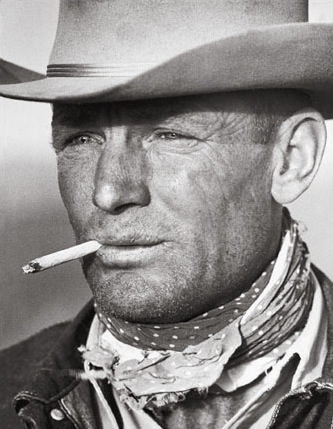
The Trouble with Men and Monsters

Hard not to love the creepy, uncanny and scary,
the spin tingling and disturbing weirdness
that raises hair and unsettles the nerves,

darkness that drifts under the chamber
door, howling under a wounded moon,
half-human wails of nameless nightmares,

organ music of a hundred missing souls,
butler who locks the lost travelers inside
a room of old smoke and dusty tapestries.

In their cold and drafty laboratories, madmen
mix volatile chemicals in boiling beakers
of luminescent liquid. Lightning caught in coils

of tension arc through the dark ether of night.
The hunchback assistant cries out, Master,
you promised me a new arm! For the love of all

that is holy and good! A lobster’s claw droops
from his shoulder. His left eye opens in an empty
socket. The scientist keeps his girlfriend

in the dark, but she’s annoyed by his inattention,
harboring suspicions about his solitary pursuits.
So, she goes downstairs. Don’t open that door!

I try to warn her. But that’s the trouble with men
playing God, creating the monsters they become,
ignoring women who love them for cellars

of high stone walls, conducting symphonies
of flesh on full moon nights, conceiving damaged
humanity and a new kind of beauty. For this,

women suffer for love and the madness
of genius, even as it manifests itself in men
and monsters, and the faint cry of creation.


Or Die Trying

Always the weather. The seasons sliding off
     the table, leaving crumbs
for the dog. The whole of it passing away,
     receding like water,
then turning toward the land and the blue hat
     it wears in summer.
I consider my prospects. Always something
     to complain about, living
like an earthquake, dying like the unfurling
     hand of a newborn rose.

What more to come of it? The air is yellow.
     The grass is yellow.
My words are yellow, though the syntax I use
     is blue. My blood is thick
with envy, riding through elastic tubes tied
     off at the ends. I look out
my window, see it approach. It knows my name,
     knows I’m a coward.
My blood is thickly luxurious, will take
     a long time to drain.


Parousia

After the arrival of the lawless
breed, ancient unholy ones,
empty eyed and silent, seducing
the daughters of men, we forgave
the devil and forgot the details.
Emperors of dark places, gods
come down from ships of clouds
to deliver us from all goodness,
these giants among us, Nephilim,
fallen angels living among sinners,
dancing in flames. We wait weary
and awake, gazing beyond
the window pane, candle calling
back night. Return of one god
or many, it doesn’t matter.
We shall greet them with praise
and honor, our daughters throwing
flowers in their path, rolling their hips
and sighing as the sun sings.
horror
Randall K. Rogers
Evil, Old and Ugly
I first saw her in the elevator. It was just her and I. It was hard to believe my eyes. She might have been a good person, I don’t know. But it didn’t look like it. She had a glazed-over look. Her eyes were cloudy. She wore an unfocused blank stare.
What’s more, she was horribly old. Furthermore, sorry to say, she was hideously ugly. She looked like she’d die any moment or was already dead. I nodded hello but there was no recognition. She had an angry cast to her leathery, much wrinkled face. She stood there, hovering over her walker. I didn’t smell anything out of the ordinary, yet.
There was no question: she was beyond evil.
The next time I saw her it was again in the elevator. This time there were other people. When people got on, the expressions on their faces, shock. There she stood, blank milky stare, looking like the wickedest, darndest, most vile, harridan, dead-looking witch ever.
We were all scared. Some shuddered. Right out of a horror movie, she was. Frizzled long unruly hair. Some, I thought I did well, for one, tried not to have a conniption. A moment of shock, but standing there, as the elevator moved, some could not recover, could not stop their staring. Others came into the elevator, gasped in shock. Some threw their arms out, jumped a bit, maybe juggled whatever they held, eventually calmed down.
The lady stood there, hunched over her walker. She appeared blind but she wasn’t. She stared straight ahead and was silent. When it was her floor, she got off, walked with her walker like a perfectly ordinary old person. She liked our terror, we surmised. Just evil, she was. Probably a too real apparition. Somebody ought to do something. Out of the elevator she walked, smug-like, down the hall toward her room.
She wore old clothes. A nineteen twenties or thirties dress, lacey in design. I didn’t get a whiff of the old girl, but after she exited the elevator, one woman said, “Does she have any family?” The rest of us geezers didn’t know. “Never seen her before yesterday,” I said.
It was uncanny. If she tried to, she couldn’t have frightened us more. She was a vision of terror. Was she trying to appear like that? Dead, a cadaver? Nobody knew. Nobody knew where she came from. She was frightening. We all were old, dying was something that regularly happened at the home, weekly if not daily. Looking at her, it was hard.
She looked dead. Unkempt. Washed or not we didn’t care. She didn’t respond to anyone’s entreaties. She scared us, she reminded us of the dead we’d soon be. I mean, she was scary. One woman, “Is she gonna die?” she asked. Nobody knew what to say. She reminded us of our own short future. And, oh Lord, dead, we’ll look like that!
Yet she was alive. She should have been hidden. Or hidden herself. Her appearance was horrible, ugly, and deathly. She had to know her effect on people. “That’s why her family abandoned her here,” the people said.
Nobody liked her. We feared for our lives. She was too ugly, too hideous, to live. Was she the living dead? She looked it. She didn’t respond like a human. I thought about the crones of old. How often their surliness, bolstered by their old ugliness, nose warts, for example, their supposedly lascivious bewitching of young men, often sealed an old woman’s fate.
I thought, wow, that might happen here. History repeating. Naw….
Nobody saw her. After those few days on the elevator, she seemed to vanish. Nobody appeared to know where she had gone. We breathed a sigh of relief. No one could find her. That night, however, a spontaneous bonfire appeared in the landscaped back area behind the home. Flames leaped among the stacked wood. Woodsmoke smell, screaming, crackling and cackling, was heard all night long.
“Don’t rub it in,” scoffed a longtime resident, watching the old woman burn.
Previously published by Mad Swirl
 The Beatnik Cowboy