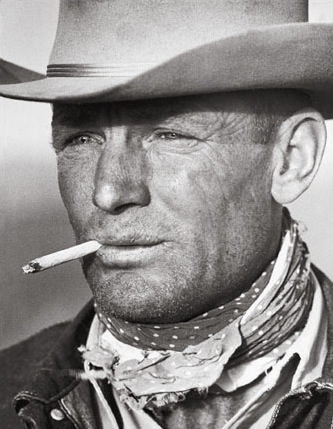
Preacher Allgood

from the smokes of long dead railroaders


sure her cat puked on the desk
my grandpa rescued from the train depot after the big fire in ‘36
sure she sold my rusted out MGB/GT
the one with the wire knock-off wheels
to an Okie while I was in rehab
and sure she spent the proceeds from that little swindle
on plane fare to Chicago to visit her mother
and sure I couldn’t get enough
of eyeballing that German/Mexican jalapeno ass
or the tamales she cooked in the big pot on my old Kenmore stove
but I wasn’t all that sorry
when she came to me on a snowy blustery evening
with big tears in her eyes and said
I’m going back to Billy
he got out of jail and he wants to have a baby
and you don’t want to have a baby
and you’re so drunk you can’t get it up most of the time
and I like you but I really want to have a baby
so I’m going back to Billy are you mad at me?


sure I wasn’t mad at her
sure I was relieved that I wouldn’t be cleaning any more cat puke
off the big slab of oak that I prized for its history and its connection
to my grandpa who began railroading
on the Kansas Southern in nineteen twenty-two
and who swallowed mustard gas in the war to end all war
and who kept a flask of “pain killer” out in his garage
along with his pea green 1950 Studebaker Champion
but I might have been a little bit mad about those tamales
because I’d never eaten homemade tamales
and unless you’ve eaten homemade tamales
stuffed with pork and homemade masa
wrapped in fresh corn husks and steamed in their own juices
or sat at a big desk that’s scarred by burns from the smokes of long dead railroaders
and waited for another poem to show up
you can’t possibly understand what this poem means

Orman Day

In a Raspy Voice
origin of my blues poems in 2018


On a sultry day waiting in the Honda
while my Muse shops in Trader Joe’s,
hoping she doesn’t forget my soft licorice,
sweating cuz the air’s turned off
and she didn’t leave the keys, admiring a gal
bending over to shove grocery bags in her trunk,
suddenly my dry mouth dropped open,
out rushed a raspy voice I didn’t recognize,
“I got the blues.” A deep breath. “I got the blues.”
Over and over, I repeated the oracular words.
As Sonny Terry has crooned, I was a white boy
lost in the blues, though I was six decades away
from being a lean pimply kid, dateless,
singing loud and off-key in the church choir.

Needed to figure out what I was bluesy about.
Couldn’t duet with John Lee Hooker
cuz I don’t have the house rent blues,
or with Etta James misty about lost love,
or with Trixie Smith or Sonny Terry
cuz I no longer sprint beside lonesome tracks,
leap into the frigid box car of a lonesome freight.
Even beside Muddy Waters, I’d be nobody’s
Hoochie Coochie Man with mojo, a black cat bone,
making pretty women jump and shout.

Back in ’02 paddled a canoe with my friend Paige
the Big Muddy from St. Paul to New Orleans,
reminded of Leadbelly as we passed Angola Prison,
Son House as I climbed over a levee to fetch water,
Robert Johnson as we rambled through Rosedale,
Earl King as I glided at last into Audubon Park.
But now I’m a tourist, no longer a traveler
who lifts a thumb, waves a hand-drawn sign,
converses with drivers who want to laugh or confess.

B.B. King could sing the blues after paying his dues,
lying in a ghetto flat numb and dusted with rime,
turned away at the welfare office, staring in a mirror
at the lined, slackening truth wrought by Father Time.

Cataracts clouding my eyes, got mobility issues
so I shuffle to avoid tearing soft tissue.
Prick my figure every morn, swallow pills
I don’t wanna take, remember and rue
every time I try to snooze. Google ex-girlfriends,
sorrowful to find them dead. Sometimes dizzy
when I clamber outta my bed. Are these my dues?
Not sure how I’m gonna do it,
but I’ve gotta take a deep breath, bellow my blues.

Scott W Schuler

Through The Altostratus

A pale and weakened light fights to be seen through the altostratus
It’s a few shades brighter out in the middle of the lake
Almost dog piss yellow near the distant horizon
That light rests on an endless bank of sea smoke laid out across the big lake
It would take a herring gull more than eighty flight miles to reach it and return
The diminished rays in its middle offer a brief sense of hope

Then fade back to gray and with them a pull back to melancholy
They leave a slight foreboding and a caution in their vacuum
This expanse of emptiness conjures a baritone choir of long dead mariners
A shanty from the lost Seamen of Superior moaning a dirge
More of a warning than the seduction call of their Siren sisters

An infinite army of continuous and tired waves storm the beach and then retreat as the pebbles and stones chase them back to the sea

Standing alone, silent and cold I study the colors like a painter and survey the sawtooth coast
A curious gull screeches hello and decides to join me
She lands near the shore, spreads out her wings and looks up to me just as a single glorious ray burns a far away hole through the cheesecloth sky
A million brilliant and blinding sparkles are coughed up by the lake and echoed by the wind with its efforts
I watch the sun continue to fight its way to the front of the line as it struggles to rip a hole across the vast cold rolled sky
Thanks to the suns exertion hope returns and the lake seems a bit kinder now
I can’t feel its warmth but I marvel at its radiance
Full of gratitude I take a mental Polaroid and wish the gull well as I move on to the possibilities


William Longman

Birds


the poem
in that literary magazine

such pretty words

it’s an exquisitely feathered
brilliantly colored
miniature songbird
admiring itself
between nervous head flicks
in the small plastic mirror
hanging in its cage

the poem
I just wrote

a large black raven
twitching carrion
in its indigo beak
death and eternity
in its cold eye
crow-hopping
unsteadily away
after having slammed
mid-flight
into the window glass


Death Row


we’re all on death row
the end of each day
another temporary stay of execution
but what will you do tomorrow?

will you sit in your death row cell
consumed with dread fixation on
the ticking clock?

will your death be quick
the snap of a light switch
then darkness?

or will it be a gradual dimming
a slow tearing away
of everything you are
as you spin on a spit
over the fire of dementia?

will you try to drown out
this inevitable cadence
in a room littered
with empty bottles
needles
a bent spoon
scattered pill bottles
all illuminated by a flickering tv screen?

will your fleeting solace
be shattered by the harsh early morning light
of awareness
that you’ve actually moved the clock hands
ahead not backwards?

or is death your intimate friend
the certainty of extinction
a context
the compulsion
the focus
the electrical current
to do what needs to be done?

in the short light
of this winter’s day

do you push for
the extreme life
the ever-present ticking down of the clock
taken as a beat
for dancing wildly
ecstatically?

do you burn with a ferocity
that illuminates
and warms
those around you?

we’re all on death row
the end of each day
another temporary stay of execution
but what will you do tomorrow?


Transmogrification


a gentle flickering of fluorescent lights

subtly animates
the hospital crash cart
a pulsing dance
of crumpled bloody wipes
and expended tubes
the only movement
in the vacated room

the accompaniment of steady beeps
and strident alarms
now silent

a bed sheet drawn up
to cover her face

yet
she still sees
briefly regards all this
in confusion

then is seized
by a great ripping apart
forcefully
and irresistibly
yanked upward
and outward
into a painfully bright
new daylight

wings suddenly stabilize
newfound flight
through strange new skies
amidst a frantically wheeling
flock

Pawel Markiewicz

The mysteries of four seasons

the dreamed winter
the storks sitting meekly in Africa
the butterfly frozen in the marvelous pond
mice write a gorgeous myth
a rural boy longs for the moonglow
witch apollonianly bewitched
a stunning world
in a moony way
I am full of druidic wizardries
You are like a dragonfly
We are singing

the dream-like spring
the storks are coming home so tenderly
the butterfly awoken in glory but sitting
mice write ovidian songs
a rural girl yearns for afterglow
in addition hex enchanted
a dazzling world
in a starlit way
I am shrouded in this cool mystery
You are such a firefly
We are trilling

the dreamy summer
the storks are nesting mayhap peacefully
the butterfly flying over becharmed garden
mice write Dionysian ode
an auntie is bent upon blue hours
the enchantress is conjured
amusing world
in a starry way
I wrapped in plethora of sorcery
You are Dionysian spider
We are chanting

the dreamful autumn
the storks are going to fly off musing
the butterfly dreaming just before coming death
mice write Apollo’s hymn
an uncle muses about cool star
the sorceress enraptured
such a cute world
in a moonlit way
I stay under a spell of tenderness
You are like a charmful bee
We carolling

Randall K. Rogers

Evil, Old and Ugly

I first saw her in the elevator. It was just her and I. It was hard to believe my eyes. She might have been a good person, I don’t know. But it didn’t look like it. She had a glazed-over look. Her eyes were cloudy. She wore an unfocused blank stare.

What’s more, she was horribly old. Furthermore, sorry to say, she was hideously ugly. She looked like she’d die any moment or was already dead. I nodded hello but there was no recognition. She had an angry cast to her leathery, much wrinkled face. She stood there, hovering over her walker. I didn’t smell anything out of the ordinary, yet.

There was no question: she was beyond evil.

The next time I saw her it was again in the elevator. This time there were other people. When people got on, the expressions on their faces, shock. There she stood, blank milky stare, looking like the wickedest, darndest, most vile, harridan, dead-looking witch ever.

We were all scared. Some shuddered. Right out of a horror movie, she was. Frizzled long unruly hair. Some, I thought I did well, for one, tried not to have a conniption. A moment of shock, but standing there, as the elevator moved, some could not recover, could not stop their staring. Others came into the elevator, gasped in shock. Some threw their arms out, jumped a bit, maybe juggled whatever they held, eventually calmed down.

The lady stood there, hunched over her walker. She appeared blind but she wasn’t. She stared straight ahead and was silent. When it was her floor, she got off, walked with her walker like a perfectly ordinary old person. She liked our terror, we surmised. Just evil, she was. Probably a too real apparition. Somebody ought to do something. Out of the elevator she walked, smug-like, down the hall toward her room.

She wore old clothes. A nineteen twenties or thirties dress, lacey in design. I didn’t get a whiff of the old girl, but after she exited the elevator, one woman said, “Does she have any family?” The rest of us geezers didn’t know. “Never seen her before yesterday,” I said.

It was uncanny. If she tried to, she couldn’t have frightened us more. She was a vision of terror. Was she trying to appear like that? Dead, a cadaver? Nobody knew. Nobody knew where she came from. She was frightening. We all were old, dying was something that regularly happened at the home, weekly if not daily. Looking at her, it was hard.

She looked dead. Unkempt. Washed or not we didn’t care. She didn’t respond to anyone’s entreaties. She scared us, she reminded us of the dead we’d soon be. I mean, she was scary. One woman, “Is she gonna die?” she asked. Nobody knew what to say. She reminded us of our own short future. And, oh Lord, dead, we’ll look like that!

Yet she was alive. She should have been hidden. Or hidden herself. Her appearance was horrible, ugly, and deathly. She had to know her effect on people. “That’s why her family abandoned her here,” the people said.

Nobody liked her. We feared for our lives. She was too ugly, too hideous, to live. Was she the living dead? She looked it. She didn’t respond like a human. I thought about the crones of old. How often their surliness, bolstered by their old ugliness, nose warts, for example, their supposedly lascivious bewitching of young men, often sealed an old woman’s fate.

I thought, wow, that might happen here. History repeating. Naw….

Nobody saw her. After those few days on the elevator, she seemed to vanish. Nobody appeared to know where she had gone. We breathed a sigh of relief. No one could find her. That night, however, a spontaneous bonfire appeared in the landscaped back area behind the home. Flames leaped among the stacked wood. Woodsmoke smell, screaming, crackling and cackling, was heard all night long.

“Don’t rub it in,” scoffed a longtime resident, watching the old woman burn.

Previously published by Mad Swirl