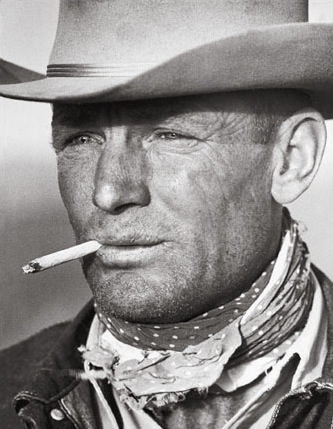
An Interview with Michael Lee Johnson

1. Can you tell our readers your technique for writing a poem? Please explain.

I don’t think there is a technique for writing a poem since they usually start from different places. The concept of a poem can come from anywhere. That is the beauty of poetry; it has no limits. The idea for a poem may evolve from a memory, a work of art, or an old unfinished poem. A poem doesn’t come from a single technique; it usually comes from a movement of thought. Once the flow starts, images appear, and alliteration comes with repletion rather naturally. One strategy I depend upon is a “kicker line or lines” bringing the poem together at the end, creating an ending with a mystical twist.

2. What in your opinion makes for an excellent or good poem?

To me, a good poem reflects a symptom of the author’s effort to make sense of the world we live in. We think of ourselves as so necessary as human beings, but the truth is we live, then we die. Does that make sense? I have always hated crossword puzzles. Ironically, I often think of a poem as a condensed puzzle, perhaps an idea that can’t be well expressed in regular prose writing but does well as a strong image or images. I would say I am an image-based poet. A good or great poem often expresses itself in clean, simple language that is memorable, concrete with its images, not abstract, and to the point with a magical effect on the psyche. An element of any good poem consists of an excellent and unique perspective of an idea. Using the best form to convey that idea. In my case, free-verse usually is, though not always, my form. Making wise word choices is essential and cutting out unnecessary words. Often, I find the best poems have ambiguity, evoking images and ideas that are hard to pin down. All good poems must elicit a strong emotional and hopefully intellectual response.

3. Can you tell us some of the best-known poets who impress you? Who are some of your favorite authors? Why do you like them?

Contemporary poets impress me the most. I developed a distaste in grade school and high school for poetry in general and the “great masters” in particular. I never liked William Shakespeare, Blake, Milton, Byron, etc. My first influence was Carl Sandburg, then Leonard Cohen. Many other poets, songwriters, writers, and philosophers inspired me: Ernest Hemingway, Hermann Hesse, Kahlil Gibran, Gordon Lightfoot, Margret Atwood, Irving Layton, Sylvia Plath, Sara Teasdale, and Charles Bukowski.

4. How often do you write? When, where, and how do you write?

I don’t set a schedule. I write when the moment hits me to write. I have always been a non-conformist. I find my placement when the movement hits me, and then it flows, but my rebellion ends there, and the revisions start. I am a revision freak. I have one poem I have corrected and made changed up to version nine. How do I write? I learned a long time ago to write drunk and edit sober. I am a poet, an editor, and a publisher.

5. Do you read poetry much? What or whom do you read?

I’m so involved with my six Facebook poetry groups which I administer, that I have little time left. I’m slowly editing and collating over 550 published poems into separate chapbooks for publication. I’m 74 and experienced a severe auto accident and now shingles, so time is critical to focus on my remaining goals. Now, the only poets I read are from my Facebook groups.

6. Throughout your life, has your poetry changed much? In what way?

Yes, it has changed. When young, my poetry was depressing and a way out of my own hell. Mostly lyrical simple poems. I started writing poetry in 1968, now 54 years ago. Poetry is no longer depressing but therapeutic and a passion. My simpler lyrical poems now use more complex arrangements of word imagery while remaining mostly within free-verse form.

7. What do you like about fiction novels? Non-fiction?

I seldom read pure fiction. I’m not much into speculative or experimental poetry, though I do dabble into mythological themes at times. Conversely, often some of my poems do have fictional components in them but more often based on factual content. I do read the occasional short story. Years ago, I read small books such as The Prophet, The Old Man and the Sea, etc.

8. What do you think is the role of poetry in today’s world? Throughout history?

Today, and throughout history, really are not comparable. Today there is mass and social media, and anyone can say they are a poet. The challenge is getting published by your editorial peers. In the old days, getting published was difficult. There were old clumsy typewriters, no internet, snail mail, stamps, and libraries the meaning of life is the purpose of poetry.

9. Who is producing the best poetry today? Where can it be found?

I used to think “Poetry” published in Chicago was number one, the holy grail, globally in poetry. However, with the left-wing shifts in local and national politics, staff changes to fit the concept of “Black Lives Matter” quality, variety, and esteem has slipped. Accordingly, I have been published in 2,250 plus small press publications over the years. I’m like Charles Bukowski; I’m a small press lover. A small press, just like The Beatnik Cowboy, is the heart of contemporary poetry. Small presses offer their hearts as a labor of love to poets keeping poetry alive. Anything else you’d like to tell our readers? Why have I always been good at those things that pay so little? Below are a few YouTube links to samples of my poetry. I started to write poems in 1968. There was a gap of 12 years when I realize little money was available to poets and I was forced to focus on making a living. Most poets reach “stardom” after they pass. This first poem, In the Moonlight, is a simple lyrical poem from 1969: https://www.youtube.com/watch?v=s4SS03trey8. This second poem, Flower Girls (V2), is more reflective of my poetry today turned into song, my poem, voice Dale Adams: https://www.youtube.com/watch?v=h-gU6_U-SiM. The poem below, Deep in My Couch, has also been converted into song by Mike Turner: https://www.youtube.com/watch?v=i-z2I9Yb4no.

The full version of a recent poem in full is below.

Deep in my Couch (V2)

By Michael Lee Johnson

Deep in my couch

of magnetic dust,

I am a bearded old man. I pull out my last bundle

of memories beneath

my pillow for review.

What is left, old man,

cry solo in the dark.

Here is a small treasure chest

of crude diamonds, a glimpse

of white gold, charcoal,

fingers dipped in black tar.

I am a temple of worship with trinket dreams,

a tea kettle whistling ex-lovers boiling inside.

At dawn, shove them under, let me work.

We are all passengers traveling

on that train of the past—

senses, sins, errors, or omissions deep in that couch.


Clay Hunt

Take it, I Don’t Want it


I would’ve shot myself if I had a gun

back then.
But that was back then.

If I had a gun now,
I’d give it to my worst enemy
and look into their eyes
as steel touched their cold hands.
I’d watch reflections
of doubt crowd their moons
that orbit around passion,
eclipsing life,
as my palms crawl
up mountains of grief
to punch the precipice of acceptance
and prove
that my hands hurt because
of my actions.

And if your actions were the last thing that
I’d experience,
         I’d understand, for I think I get human nature.
Nature, it’s kind of funny.

Anyway, I’d give you the gun.
Take it, I don’t want it.

Ian Copestick

Absolutely Terrifying

One thing that
worries me about
getting older, is
that already, when
I find myself
reminiscing, at times
I find myself veering
between real memories,
and plots of films, books
films, songs etc.

It's absolutely terrifying. 

Noel Negele

A million little pieces

Run all you want.
The chaser is in your heart.

Kill the dangerously naive child
that nests in there.
It's too much work.

You'll have to jump in the waves,
pull the memories out
before they drown.

Take a deep breath.
Your lungs are still alive.

The mountains are watching.

Feel the wind on your face 
smell the salt of this sea
that wants to drown you.

Look into the depth of you
to conquer the surface of you
don't just ride the ripples
they won't go far
they won't reach the shore.

The underground current
slides like a whisper beneath you
skate into it,
skate into you.

You’ll have to go 
through it to
escape it.

Take a deep breath.
Begin the downwards journey,
know that you might never 
hold enough hope 
to reach the surface again.

Swim downwards into the mouth of it,
look at the dark face that looks from under.
It gets bigger as you approach, I know.

Don't pussy out.

Be kind to the monster.
It used to be you.
It will always be you.
Kiss it,
do not abandon it.

Don't leave nothing of you drowning.
It's a pity.
It’s the saddest thing of saddest things.

Don't mourn you—
it's too early.

Help you come back.

Above the surface
life is waiting for you
like the soft earth 
does the seed.

Daniel Klawitter

Bless Your Heart Sonnet

You been conceited since the day you was born.
Walkin’ around with your nose so dang high
In the air, you could drown in a rainstorm!
You no apple pie on the fourth of July.
You no sweet tea on a warm summer day:
More like spoilt milk—in case you forgot it.
Struttin’ around in your new lingerie,
But no one gonna write you a sonnet. 
I swear to Gawd woman, you smash me to bits
And our time together is cattywampus.
You can kiss my behind and kiss my grits.
You ain’t no Georgia peach, you just pompous.
But bless your heart, you sure did butter my biscuit!
And when you sizzle like bacon? Cain’t resist it. 

Russell Streur

BECKON HILL

Saigon fell
And still too young for bars
Annette and Cumberland   

Climbed Beckon Hill     
And smoked away the afternoon
With a couple joints

Promised to each other
Forever to stay high
And sealed that vow

With a shotgun kiss
Until the future unfolded into the past
From the projects to the nether dunes

And she flew too near the moon
Playing dice left-handed
With Circe and the crones

And he flew too near the sun
Bowling with the Devil and his crew
Chasing stones in the South of France

And all those years
In the upper atmosphere
Took their toll on bone and lung

Now she is singing underwater
And cannot catch her breath
In the sea off Samothrace

And he cannot take another step
Legless in Cyrenaica
Crippled in Saharan waste.

Sayani Mukherjee

Hide and Seek 

My moon has faced up. 
Gone are the days of sledge sleep Snow
Of winter's river bed, dug and caved 
upon the mighty vast
Of poplar heights. 
There little beads of seed flowers
play Hide and seek
Over the hill berry row 
In the dark dusty chimney doors. 

Three summers have rushed out
And I come back-
To a valley sponged with flying kites
The lake there blue and shivery 
With smallest touch 
And transparent cello whines 
from dark underneath. 

Knitted and stretched among woollen shades
The trails that jingle for more warmth
The fishermen there makes a circle
And offer sacrifices
For the star shaped maiden face
Who ensnared my vision
With a giant net of coloured stones
And paper bag boats. 

Far away, tip top beats 
of cascade mountains
Honk my tunnel vision
This is a path I chose
Of clovers and germanium bloom
And Lullabies of mother's dream. 

Michael Lee Johnson

Poetry Man

I’m the poetry man, understand?
Dance, dance, dance to the crystals of night,
healing crystals detox nightmares, night tremors.
Death still comes in the shadow of grief,
hides beneath this blanket of time,
in the heat, in the cold. 
Hold my hand on this journey
you won’t be the first, but
you may be the last.
You and I so many avenues,
ventures & turns, so many years together
one bad incident, violence, unexpected,
one punch, all lights dim out.


97, Coming to Terms & Goodbye
(An atheist faces his own death)

Wait until I have to say goodbye,
don’t rush; I’m a philosophical professor
facing my own death on my own time.
It takes longer to rise to kick the blankets back.
I take my pills with water and slowly lift
myself out of bed to the edge of my walker.
Living to age 97 is an experience I share
with my caretaker and so hard to accept.
It’s hard for youngsters who have not experienced
old age to know the psychology of pain
that you can’t put your socks on or pull
your own pants up without help anymore—
thank God for suspenders.
“At a certain point, there’s no reason
to be concerned about death, when you die,
no problem, there’s nothing.”
But why in my loneliness, teeth stuck
in with denture glue, my daily pillbox complete,
and my wife, Leslie Josephine, gone for years,
why does it haunt me?
I can’t orchestrate, play Ph.D. anymore,
my song lyrics is running out, my personality
framed in a gentler state of mind.
I still think it necessary to figure out
the patterns of death; I just don’t know why.
“There must be something missing
from this argument; I wish I knew.
Don’t push me, please wait; soon
is enough to say goodbye.
My theater life, now shared, my last play,
coming to this final curtain, I give you
grace, “the king of swing,” the voice of
Benny Goodman is silent now,
an act of humanity passes, no applause.

*Dedicated to the memory of Herbert Fingarette, November 2, 2018 (aged 97). 

Ian C. Smith

Afflicted


When I hit the road, not for roadwork this time, morning light thin like my shakily packed bag, it was the end of winter, time to go.  A scrapper since boyhood, neurals now explosive, I left my treasured boxing scrapbooks behind with the sad-eyed girl I married.  After my seventh bout, concussed, untreated, I knew I must box no more.  Subscribing to Ring Magazine at first, scissoring action shots to paste in pages beyond my meager cuttings, I continued flirting from afar with what I realized was an uncaring, brutal sport.  I fretted for the ersatz feeling of glory entering the ring ducking between ropes, referees’ ignored instructions, nervous tap of gloves before combat.  I also left training behind: contest posters pasted on the gym’s walls, liniment and leather’s waft, soft slap of skipped rope, the speedball’s thrummed tattoo; instead, learned to read to overcome depression, a different kind of obsession taking root.  Trapped in a neutral corner now, alone with nothing left of that faded time except my developed yet weakening brain, memory’s slippage like an unwanted heirloom after these quiet years afloat in the world of literature, art, this unaccountable loss, those grueling days of damage done, that sad-eyed girl, stagger me, a rip to the solar plexus.  I feign nonchalance, keep on the move, defence stoic yet porous, want this tempo of rapid decline to slow, dreaming back, wondering what became of my youth during this still life, those scrapbooks, crave to trace their pages’ yearning once again.

Fabrice B. Poussin

 Living at 55 


It is all a matter of time 

as he watches from the windows 

darkened by years of abandon 

an old cinemascope movie at twenty-four frames per second 

a super high definition at twenty-nine 

lives moving by at fifty-five miles per hour. 


They come and they go without a sign 

making not a trace upon the present 

no memory of their passage remains for the future 

no story to be told for these unknown ghosts 

in a rush to reach the next stop sign 

another supper with friends becoming strangers. 


They hit the asphalt in the early hours 

to slide by again as the skies darken 

hoping for a smooth journey to their temporary homes 

while some will crash into an unseen oblivion 

remembered for a few lines in the morning news 

most will merely perish asleep at high speed. 


Fixated on the lights ahead, their dreams too are in slumber 

fleshy robots they no longer ask those puerile questions 

of those years when still attempting to survive 

their souls have been subdued by the unavoidable race 

intoxicated by the unbearable sleeping agent they call a life 

they continue on the path unable to rediscover their extinct fancies.